Dynamic & Aleo: Making it easy to build private payment apps | Built on Aleo


Welcome to Built on Aleo, a series spotlighting the projects and protocols building on Aleo's privacy-first infrastructure.
This edition features Dynamic, a Fireblocks company that provides wallet infrastructure for app developers. More than 50 million users have been onboarded across apps built on Dynamic, and it's now live on Aleo as the first wallet infrastructure provider to support institutional-grade embedded wallets for private payments.
By adding Aleo to its wallet infrastructure, Dynamic gives developers a way to ship private, programmable payment apps without building a wallet stack first.
How Dynamic made building financial apps simple
Every blockchain app starts with the same issue: the end user needs to be onboarded to a wallet, a foreign concept to most end users expecting a standard account sign-in experience. Due to their decentralized nature, interacting with onchain wallets can create a lot of friction for developers wanting to create a UX that’s easy to navigate for someone coming from the TradFi world.
Whether you look at onboarding, key management, account recovery, transaction signing, or any other blockchain native feature, navigating these processes is often complex and clunky. None of it is the product a developer set out to build, but fixing account onboarding is the first thing that any project has to do before shipping a single feature.
Dynamic set out to remove that problem entirely by providing wallet infrastructure that feels closer to interacting with a regular financial account. Dynamic handles onboarding, MPC-based key management, independent recovery, disaster recovery, and secure transaction signing, so developers can plug into existing infrastructure instead of building their own.
The result is that a team building a payments app gets the same functionality as a custom-built, simple sign-in wallet stack, without months of engineering or a dedicated infrastructure team.
But until recently, one piece was still missing: privacy that could hold up for real financial use cases.
Aleo closes that gap.
Why privacy remained out of reach for Dynamic’s developers
Dynamic’s wallet infrastructure already made onboarding, key management, and recovery feel like signing into any other account, removing the biggest barrier to building a usable app. But even with that solved, developers building on Dynamic still ran into the issue of privacy.
In Web2, privacy is a baseline expectation: nobody expects their bank balance or salary to be visible to strangers. In Web3, it’s often treated as an afterthought, something bolted on rather than built in from the start.
Developers had few options for adding privacy, and each came with a cost. Mixers obscure a transaction’s origin after the fact, but they don’t prevent the initial exposure. Plus, regulators increasingly treat them as a red flag, not a feature.
Privacy coins like Monero and Zcash protect balances and transaction details, but they weren’t built for programmability: no smart contract logic, no stablecoins, no way to build the kind of financial application a payroll platform or fintech actually needs.
That left developers building on Dynamic with a trade-off: build onchain and accept that users’ financial data would be exposed, or keep sensitive workflows on traditional financial rails, where user privacy was possible but without the speed or programmability that blockchain payments promised.
How Aleo brought privacy to Dynamic’s wallet infrastructure
Aleo is a blockchain built for private, programmable applications. At its core is zero-knowledge proof technology, cryptography that lets the network verify a transaction is valid without revealing the underlying data.
This makes private, onchain finance possible. Balances stay hidden, counterparties remain confidential, and amounts are encrypted, all while the transaction itself remains fully verifiable.
Dynamic integrated Aleo, becoming the first wallet infrastructure provider to support institutional-grade embedded wallets for private payments. This gave a privacy layer to Dynamic's existing infrastructure: onboarding, MPC-based key management, independent recovery, disaster recovery, and secure transaction signing, all built to work with Aleo's public and shielded balances from the start.
"A developer working at a payroll company who has never touched crypto should be able to build a private payments app in a weekend. That's the bar." Itai Turbahn, VP Embedded Wallets, Fireblocks
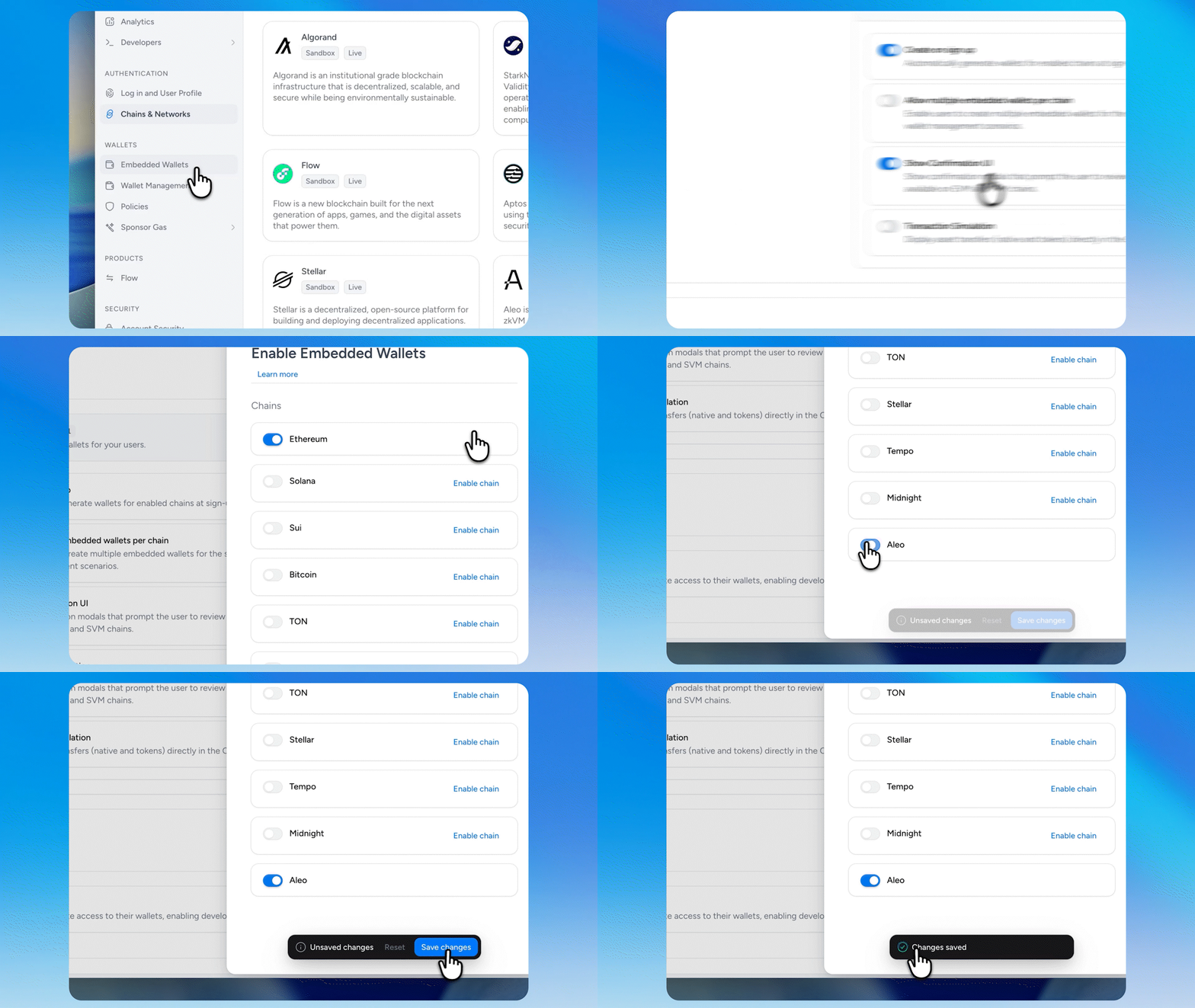
This also strengthens Aleo’s own developer experience: teams building directly on Aleo can now add Dynamic’s wallet infrastructure the same way they’d add any other SDK, toggling it on inside Dynamic's embedded wallet settings. They then get onboarding, recovery, and transaction signing that feels like a modern Web2 account system rather than a blockchain integration.
Existing embedded wallets pick up Aleo's public and shielded balances automatically, with no separate ZK integration required.
What private payments through Dynamic unlock for builders and the people they pay
For developers, the integration closes a gap that prevents user-friendly privacy-preserving apps from going to market. Instead of a team needing deep zero-knowledge expertise before it can start, Dynamic handles the wallet layer.
This frees developers to focus on the actual product, whether that's a payroll platform, a humanitarian aid tool, or a consumer app that happens to need private balances.
Payroll is a use case where integrating Aleo into Dynamic can have a big impact. Publishing company payroll and individual salary data to a public, permanent ledger is a non-starter for most global enterprises. It’s a compliance and confidentiality requirement, and one most onchain payroll tools fail to meet without privacy built in.
With Aleo integrated into Dynamic's wallet infrastructure, an enterprise or HR platform can start running private stablecoin payroll, and employees can access their pay through a simple interface without exposing compensation data to anyone who isn't supposed to see it.
For a closer look at how private stablecoin payroll works in practice, read our case study on Toku, who built the first production implementation on Aleo.
The same infrastructure gap applies to other industries dealing with sensitive financial data.
An aid organization can use Dynamic's embedded wallets to onboard thousands of non-technical recipients through a simple login, an email or social account rather than a seed phrase, and get funds to people faster without asking them to become crypto users first.
Integrating Aleo brought Dynamic benefits similar to those Utila experienced when it added support for Aleo’s private stablecoins: privacy stopped being something a team had to build from scratch, and became something they could build on top of instead. For a closer look at what that integration unlocked for institutional custody, read our case study on Utila.
Dynamic and Aleo make it simple to build private payment apps
By coming together, Dynamic and Aleo removed the two biggest barriers to shipping usable onchain payment apps: building easy-to-navigate wallet infrastructure and the privacy needed to protect users’ financial data. In short:
- Dynamic, a Fireblocks company, is the first wallet infrastructure provider to support institutional-grade embedded wallets for private payments on Aleo.
- Dynamic handles onboarding, MPC-based key management, independent recovery, disaster recovery, and transaction signing, so developers don't have to build wallet infrastructure from scratch.
- Adding Aleo takes one toggle inside Dynamic's embedded wallet settings, and existing embedded wallets pick up public and shielded balances automatically.
- This made it possible to access onchain financial tooling for a number of mainstream use cases including payroll, humanitarian aid, and crisis response tools.
- Dynamic already has 50M+ users onboarded across the apps built on it, a number that’s likely to grow now that privacy is easily accessible to its builders.
Head to aleo.org to learn more about private payments, visit dynamic.xyz/ecosystems/aleo to start building, or go straight to the docs for full setup details.
You can also paste Dynamic’s quickstart prompt directly into an AI code editor and let it handle the integration.
To learn more about the apps using Aleo for private onchain infrastructure, check out our ecosystem page. You can also follow us on LinkedIn and X to hear about future updates and case studies like this.